LABSA 90%: Specifications, COA Results and Uses of Linear Alkyl Benzene Sulphonic Acid
Real COA results for our LABSA 90% — active matter, free acid, NDOM, colour and water — with what each figure means for your detergent, plus uses, LABSA 90 vs 96 and safe handling.
By Kant Exim team · · 5 min read
On this page
LABSA (linear alkyl benzene sulphonic acid) is the main raw material for detergent powders, cakes and liquid detergents. Once it is neutralised with caustic soda or soda ash it becomes sodium LAS, the anionic surfactant that does most of the cleaning in everyday laundry and dishwash products. In many markets it is simply called acid slurry or LAS acid.
Kant Exim supplies LABSA 90%. This guide shows the actual certificate of analysis (COA) results for the material we supply, explains what each figure means for your detergent, and covers uses, packing and safe handling.
Product at a glance
| Property | Value |
|---|---|
| Product | LABSA 90% (linear alkyl benzene sulphonic acid) |
| Other names | LAS acid, acid slurry, dodecylbenzene sulphonic acid (DDBSA) |
| CAS No. | 27176-87-0 / 85536-14-7 |
| Grade | 90% active matter |
| Form | Viscous brown liquid |
| HS code | 3402 31 |
| Hazard class | Corrosive (Class 8) |
| Documents | COA with every lot, MSDS / SDS |
COA results: what our LABSA 90% tests at
The table below is from the certificate of analysis of a recent lot. Every lot is dispatched with its own COA, so you can check the exact figures for the material you receive.
| Parameter | Specification | Result |
|---|---|---|
| Appearance | Viscous light-brown liquid | Brown |
| Active matter (by mol. wt.) | 90.0% ± 1.0% | 89.80% |
| N.D.O.M. | Max. 1.5% | 0.49% |
| Free acid | Max. 7.5% | 5.76% |
| Colour (Klett, 5% solution) | Max. 30 Klett | 16 |
| Water content | Max. 5.0% | 3.95% |
Every parameter is inside its limit. Active matter sits close to the 90% target, NDOM is about a third of the maximum, and the colour is about half the limit.
What our LABSA 90% looks like
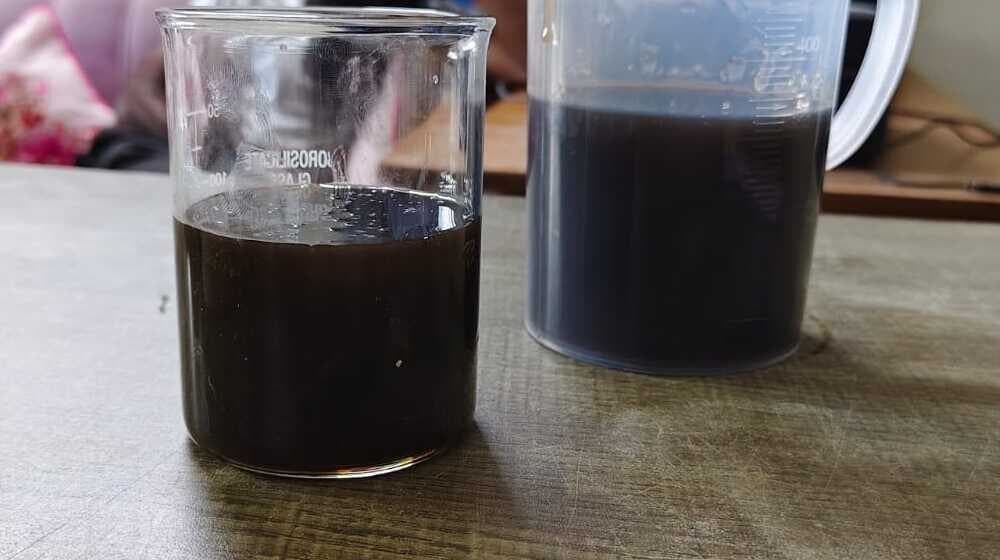
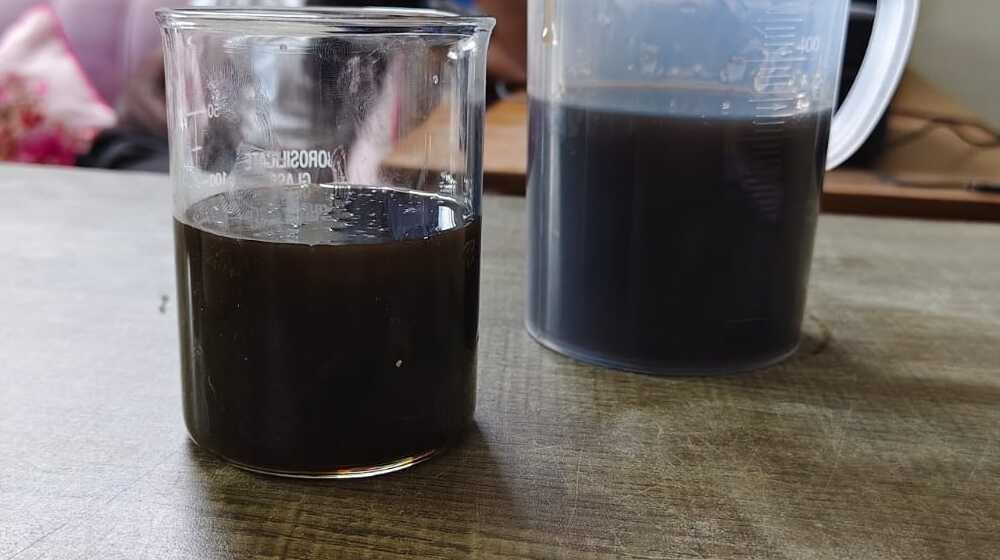
These are photos of a sample of the LABSA we supply. In bulk it looks dark brown; poured in a thin stream it shows its amber colour. It is a thick liquid that pours slowly and steadily, like a light syrup.
What the numbers mean
Active matter
Active matter is the share of the product that is actual sulphonic acid, the part that becomes surfactant in your detergent. It is calculated from the molecular weight of the alkyl benzene used, which is why COAs say "by mol. wt.". At 89.80% the lot is within the 89–91% band of the 90% grade.
Active matter decides how much LABSA your formula needs. To compare offers fairly, work out the price per kilogram of active matter:
price per kg of active matter = price per kg ÷ (active matter % ÷ 100)
N.D.O.M. (non-detergent organic matter)
NDOM is organic material that went through the process without being sulphonated, mostly unreacted alkyl benzene. It adds weight but no cleaning power, and high levels can affect foam and smell in the finished product. Our 0.49% is well below the 1.5% limit.
Free acid
Free acid is the acidity left over from sulphonation that is not part of the sulphonic acid itself. It does no cleaning, and it uses up caustic soda or soda ash when you neutralise. Your formulator should include the free-acid figure from the COA when calculating how much alkali to add.
Colour (Klett, 5% solution)
Colour is measured on a 5% solution in a Klett colorimeter: the lower the number, the lighter the acid. Lighter LABSA makes it easier to produce white or pale-coloured powders and clear liquids without extra brighteners. A reading of 16 against a limit of 30 is a good result for this grade.
Water content
Water is part of every LABSA grade; in a 90% grade it is one of the main reasons the active matter is lower than in 96%. Keeping it under 5% also keeps the acid stable in storage. This lot tested at 3.95%.
Where LABSA is used
LABSA is neutralised before use. The reaction is simple:
LABSA + caustic soda (NaOH) → sodium LAS + water
Sodium LAS is then used in:
- Detergent powder, both spray-dried and dry-mix (where LABSA is neutralised with soda ash in the mixer)
- Detergent cakes and bars for laundry
- Liquid detergents and dishwash liquids and bars
- Household and industrial cleaners, such as floor and surface cleaners
- Textile processing, as a wetting and scouring agent
- Emulsifiers in agrochemical and other industrial formulations
LABSA 90% or LABSA 96%?
Both grades are the same chemical; the difference is how much of each kilogram is active.
| LABSA 90% | LABSA 96% | |
|---|---|---|
| Active matter | About 90% | About 96% |
| Water and free acid | Higher | Lower |
| Price per kg | Lower | Higher |
| Typical buyers | Detergent cake, bar and dry-mix powder makers, cost-focused formulas | Spray-dried powders and liquids with tight specifications |
The right grade is the one that gives you the lower cost per kilogram of active matter for the quality you need. Use the formula above with the active matter on each supplier's COA.
Packing and transport
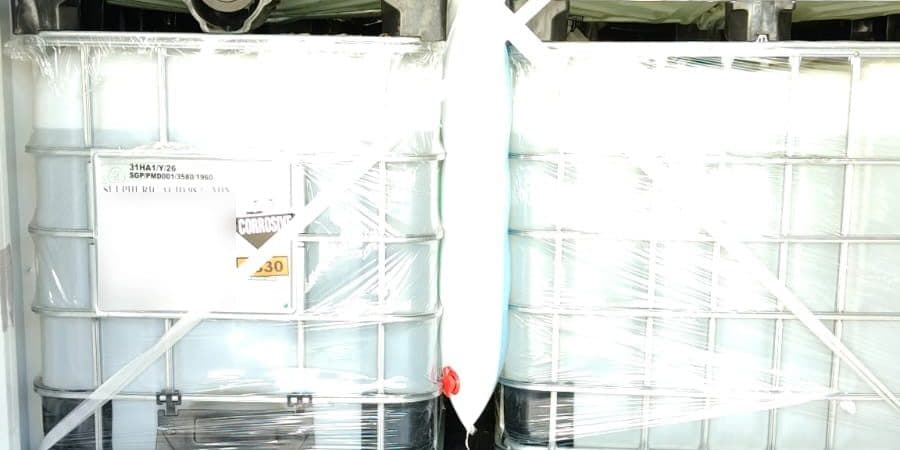
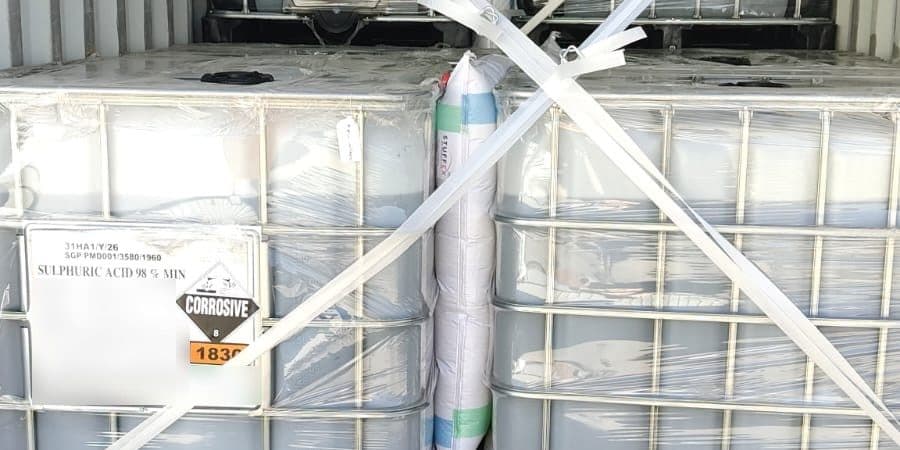
LABSA is usually supplied in HDPE drums, IBCs or bulk tankers. Packing and quantity are confirmed with each quotation. It is corrosive and is normally transported as a Class 8 dangerous good; the UN number and packing group for each lot are stated in its safety data sheet.
Storage and handling
- Store in HDPE or stainless-steel tanks and drums. LABSA corrodes mild steel.
- Keep containers closed. The acid absorbs moisture from the air, which changes its water content.
- Store in the shade, away from heat. LABSA darkens when it is kept hot for long periods.
- Keep it away from caustic soda and other alkalis (they react and give off heat) and from strong oxidisers.
Safety essentials
LABSA causes severe skin burns and eye damage and is harmful if swallowed. The key points from the safety data sheet are:
- Wear protective equipment: chemical goggles with a face shield, acid-resistant rubber gloves, an apron and boots.
- First aid: flush skin or eyes with plenty of running water for at least 15 minutes and get medical help. If swallowed, rinse the mouth and do not induce vomiting.
- Spills: contain with sand or earth, neutralise the residue with soda ash or lime, and dispose of it under local rules. Do not wash it into drains.
The full MSDS / SDS comes with every order. Read our guide to what to check in an SDS.
Documents with every order
- Certificate of analysis (COA) for the lot supplied — see how to read a COA
- Material safety data sheet (MSDS / SDS)
- Invoice, packing list and the transport documents required for a Class 8 dangerous good
Request a quote
To get an accurate price, send us:
- Quantity, and whether it is a one-time or a regular requirement
- Grade — LABSA 90%, or the active matter your formula needs
- Packing — drums, IBCs or tanker
- Delivery location, or your destination port
See the LABSA product page for packing and minimum order, or contact us for a quote.
Frequently asked questions
What is the active matter of your LABSA?
Our LABSA 90% is specified at 90.0% ± 1.0% active matter. A recent lot tested at 89.80%, and each lot comes with its own certificate of analysis.
What is LABSA used for?
LABSA is neutralised with caustic soda or soda ash to make sodium LAS, the main surfactant in detergent powder, detergent cakes and bars, liquid detergents, dishwash products and household cleaners.
What is the difference between LABSA 90% and LABSA 96%?
They are the same chemical with different active matter: about 90% versus 96%, with the 90% grade carrying more water and free acid. Compare offers on price per kilogram of active matter rather than price per kilogram.
Is acid slurry the same as LABSA?
Yes. Acid slurry and LAS acid are common trade names for LABSA, linear alkyl benzene sulphonic acid.
How should LABSA be stored?
In closed HDPE or stainless-steel drums or tanks, in the shade and away from alkalis and oxidisers. LABSA corrodes mild steel and absorbs moisture from the air.
Do you provide a COA and MSDS for LABSA?
Yes. A certificate of analysis for the lot supplied and the material safety data sheet (MSDS / SDS) come with every order.
- #LABSA 90%
- #linear alkyl benzene sulphonic acid
- #LAS acid
- #acid slurry
- #dodecylbenzene sulfonic acid
- #detergent raw material
- #COA
- #HS 3402 31