Titanium Dioxide: Rutile vs Anatase — Which Grade Do You Need?
Rutile and anatase titanium dioxide compared: opacity, whiteness, durability and abrasion, which grade suits paints, plastics, inks, paper and fibres, why 93% TiO₂ is normal, and what to check on a COA.
By Akshay Dangar, BDE · · 5 min read
On this page
Titanium dioxide (TiO₂) is the world's most important white pigment. It is what makes paint opaque, plastics bright white and printing inks clean, because almost nothing else scatters light as strongly. It comes in two commercial crystal forms, rutile and anatase, and choosing the wrong one can cost you opacity, durability or money.
This guide explains the difference, which grade suits which use, why a good pigment is "only" about 93% TiO₂, and what to check on a certificate of analysis (COA). Kant Exim supplies rutile titanium dioxide, paint and plastics grade, with a minimum of 93% TiO₂.
Our titanium dioxide at a glance
| Property | Value |
|---|---|
| Product | Titanium dioxide, rutile grade |
| Chemical formula | TiO₂ |
| CAS No. | 13463-67-7 |
| Grade | Paint / plastics grade |
| TiO₂ content | Min. 93% |
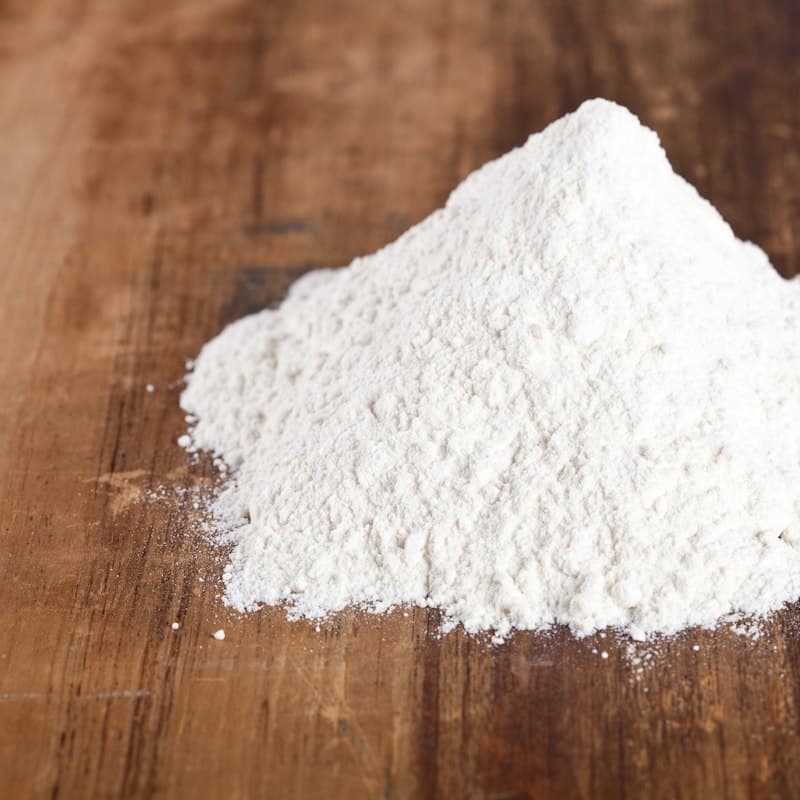
| Appearance | White powder |
| HS code | 3206 11 (pigments with 80% or more TiO₂) |
| Packing | 25 kg bags |
Rutile vs anatase at a glance
Both are titanium dioxide, but the atoms are arranged differently, and that changes how the pigment behaves:
| Property | Rutile | Anatase |
|---|---|---|
| Refractive index | About 2.7 (higher) | About 2.55 |
| Opacity (hiding power) | Higher: you need less pigment for the same coverage | Lower |
| Colour tone | Slightly warmer, creamier white | Slightly bluer, "cleaner" white |
| Outdoor durability | Good: resists chalking and yellowing, especially when surface-treated | Poorer: breaks down binders in sunlight, causing chalking |
| Hardness / abrasion | Harder (Mohs about 6–6.5) | Softer (Mohs about 5.5–6), gentler on machinery |
| Density | About 4.2 g/cm³ | About 3.9 g/cm³ |
| Typical uses | Paints (interior and exterior), plastics and masterbatch, inks, coatings | Indoor paints, paper, synthetic fibres, rubber, ceramics |
In short: rutile hides better and lasts longer outdoors, so it is the standard choice for most paints and plastics. Anatase is chosen where its softer particles, bluer tone or lower price matter more than outdoor durability.
Why rutile hides better
A white pigment works by scattering light. The bigger the difference between the pigment's refractive index and that of the binder or plastic around it, the more light it scatters. Rutile's refractive index of about 2.7 is the highest of any common white pigment, higher than anatase's 2.55 and far above fillers like calcium carbonate at about 1.6. That is why less rutile is needed for the same opacity.
Particle size matters too. Pigment-grade TiO₂ is milled to about 0.2–0.3 microns, roughly half the wavelength of visible light, where scattering is strongest.
Why anatase chalks outdoors
Titanium dioxide absorbs ultraviolet light, and the energy can break down the paint binder or plastic around the particles. The surface then turns powdery: this is called chalking. Anatase is far more active in this way than rutile, so it is used mainly indoors. Rutile pigments for exterior use are also surface-treated, which reduces chalking further.
Which grade for which use?
| Use | Recommended grade | Why |
|---|---|---|
| Exterior paints and coatings | Rutile, durable surface-treated grade | Opacity and resistance to chalking and fading |
| Interior emulsion paints | Rutile general-purpose grade | Best hiding per kg; anatase only where cost comes first |
| Plastics and white masterbatch | Rutile with organic surface treatment | Disperses easily, low moisture, stable at processing temperatures |
| Printing inks | Rutile, fine and easy-dispersing | High opacity in thin films |
| Paper and board | Anatase or rutile | Anatase is softer on paper machines; rutile gives more opacity |
| Synthetic fibres | Anatase | Soft particles that don't wear spinnerets |
| Rubber, ceramics | Anatase or rutile | Depends on the colour and cost target |
Why a good pigment is "only" 93% TiO₂
Buyers are sometimes surprised that a quality pigment isn't 99% TiO₂. Most rutile pigments are deliberately coated with small amounts of alumina, silica or zirconia, often plus an organic treatment. The coating:
- makes the pigment easier to disperse in paint or plastic
- improves weather resistance and reduces chalking
- improves gloss and colour stability
These coatings make up the rest of the weight, so a well-treated pigment typically shows 90–95% TiO₂. Our paint and plastics grade is specified at a minimum of 93% TiO₂. A higher TiO₂ figure is not automatically better: what matters is how the pigment performs in your formula.
What to check on a titanium dioxide COA
| Parameter | What it tells you |
|---|---|
| TiO₂ content | Pigment content; for treated rutile, typically 90–95% |
| Rutile content | Share of rutile crystals; a good rutile pigment is about 98% rutile or more |
| Whiteness / brightness | How white the powder is, often as an L* value |
| Tinting strength | Opacity and colour strength compared with a reference standard |
| Oil absorption | How much binder the pigment takes up; affects paint viscosity and gloss |
| pH | Compatibility with your formulation |
| Volatiles at 105 °C | Moisture; important for plastics, where moisture causes defects |
| Residue on 45 µm sieve | Coarse particles or grit that can spoil film finish |
Every lot we supply comes with its own COA. Ask us for a sample and test it against your current pigment in your own formula before a full order.
Packing, storage and handling
- Packing: 25 kg bags. A 20 ft container usually carries about 20 tonnes.
- Storage: keep bags dry, sealed and on pallets. Titanium dioxide picks up moisture, which makes it harder to disperse and can cause defects in plastics.
- Shipping: titanium dioxide is not classed as a dangerous good for transport.
- Handling: it has low toxicity, but avoid breathing the dust. Use dust masks and local extraction where bags are emptied, and safety goggles.
The safety data sheet comes with every order. See our guide to what to check in an SDS, and our explainer on technical, food and pharma grade chemicals.
Request a quote
We supply rutile titanium dioxide, paint and plastics grade. To get a price, send us:
- Quantity, and whether it is a one-time or a regular requirement
- Your use: exterior or interior paint, masterbatch, ink and so on, and the grade you use now, if any
- Any key specifications: oil absorption, surface treatment, whiteness
- Delivery location, or your destination port
If you need anatase, tell us and we will check availability. See the Titanium Dioxide (Rutile) product page or contact us for a quote.
Frequently asked questions
What is the difference between rutile and anatase titanium dioxide?
They are two crystal forms of TiO₂. Rutile has a higher refractive index, so it hides better, and it resists chalking outdoors. Anatase is softer, slightly bluer in tone and less durable outdoors, and is used mainly indoors, in paper and in synthetic fibres.
Which titanium dioxide is best for paint?
Rutile. It gives the most hiding power per kilogram, and surface-treated rutile grades resist chalking and fading in exterior paints. Anatase is only used in some interior paints where cost matters more than performance.
Which titanium dioxide is used in plastics and masterbatch?
Rutile grades with an organic surface treatment, low moisture and good dispersibility. They give high opacity and stay stable at plastics processing temperatures.
Why is rutile titanium dioxide only 93% TiO₂?
Most rutile pigments are coated with alumina, silica or zirconia, often with an organic treatment, to improve dispersion and weather resistance. The coating makes up the rest of the weight, so 90–95% TiO₂ is normal for a quality treated pigment.
What is the HS code for titanium dioxide pigment?
HS 3206 11 covers pigments and preparations containing 80% or more titanium dioxide by dry weight. Confirm the full national tariff code with your customs broker.
Do you supply anatase titanium dioxide?
We supply rutile titanium dioxide, paint and plastics grade, with a minimum of 93% TiO₂ in 25 kg bags. If you need anatase, tell us your specification and we will check availability.
- #titanium dioxide
- #TiO2
- #rutile vs anatase
- #rutile titanium dioxide
- #white pigment
- #paint raw materials
- #masterbatch
- #HS 3206 11