Caustic Soda Flakes 98%: Specifications, COA Results, Uses and Safe Handling
Real COA results for our caustic soda flakes — 98.07% NaOH, low salt, iron and no mercury — with what each figure means, flakes vs lye, uses, how to dissolve flakes safely, and packing and storage.
By Bharti Gohel · · 6 min read
On this page
Caustic soda (sodium hydroxide, NaOH) is one of the most widely used industrial chemicals. It is the alkali behind soap, detergents, textile processing, alumina and paper, and it is used for pH control in countless plants. Kant Exim supplies technical-grade caustic soda flakes of about 98% NaOH, made in membrane-cell plants and supplied with a certificate of analysis (COA) for every lot.
This guide shows the actual COA results for a recent lot, explains what each figure means, and covers the different forms, the main uses, how to dissolve flakes safely, and packing, storage and transport.
Product at a glance
| Property | Value |
|---|---|
| Product | Caustic soda flakes 98% |
| Other names | Sodium hydroxide, lye, NaOH |
| Chemical formula | NaOH |
| Molecular weight | 40.00 |
| CAS No. | 1310-73-2 |
| Grade | Technical / industrial, about 98% NaOH (min. 97.0%; min. 99.5% on dry basis) |
| Test standard | IS 252:2013 (Indian Standard for caustic soda) |
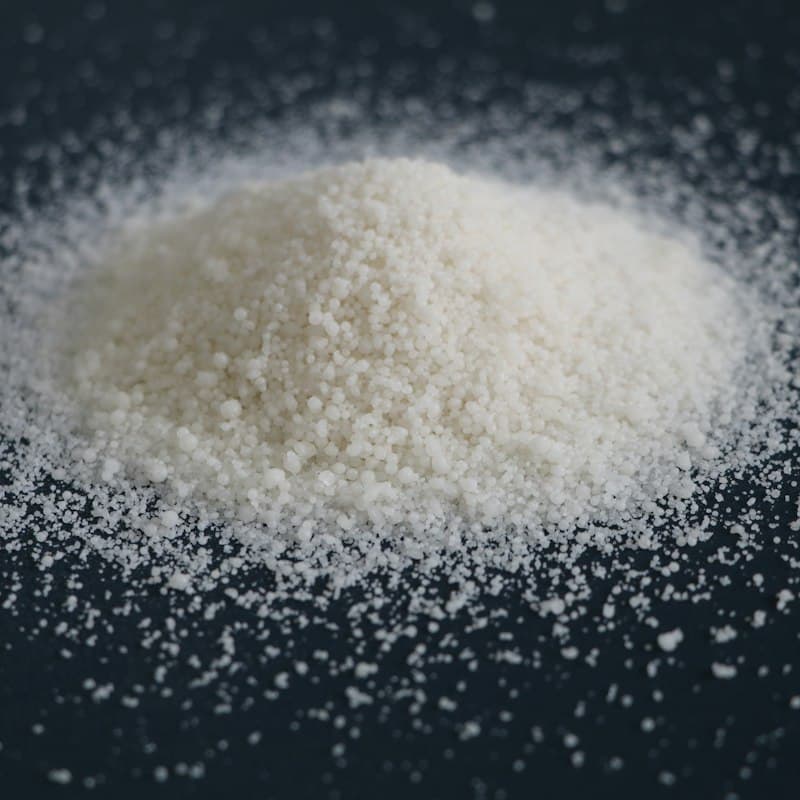
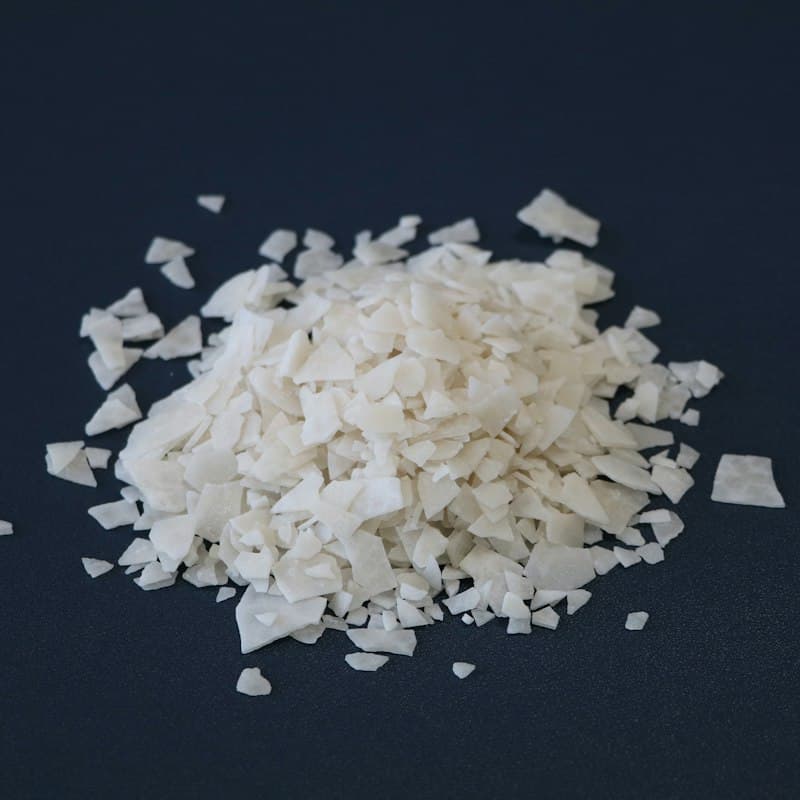
| Form | White flakes |
| HS code | 2815 11 |
| UN number | UN 1823, Class 8 (corrosive), Packing Group II |
| Packing | 25 kg / 50 kg HDPE bags |
COA results: what our caustic soda flakes test at
The table below is from the certificate of analysis of a recent 35-tonne lot, manufactured in September 2026 and tested to IS 252:2013 methods. Every lot is dispatched with its own COA, so you can check the exact figures for the material you receive.
| Parameter | Specification | Result |
|---|---|---|
| Description | Flakes free from visible impurity | Flakes free from visible impurity |
| Sodium hydroxide (NaOH) | Min. 97.00% | 98.07% |
| NaOH on dry basis | Min. 99.50% | 99.74% |
| Sodium carbonate (Na₂CO₃) | Max. 0.40% | 0.23% |
| Chlorides (as Cl) | Max. 0.0300% | 0.0144% |
| Sulphates (as SO₄) | Max. 0.0300% | 0.0055% |
| Silicates (as SiO₂) | Max. 0.020% | 0.002% |
| Matter insoluble in water | Max. 0.050% | 0.027% |
| Iron (as Fe) | Max. 20 ppm | 4.51 ppm |
| Copper (as Cu) | Max. 2.0 ppm | 0.036 ppm |
| Manganese (as Mn) | Max. 1.0 ppm | 0.06 ppm |
| Chlorates and perchlorates (as NaClO₃) | Max. 10 ppm | 1.59 ppm |
| Total mercury (as Hg) | Max. 0.02 ppm | Not detected |
Every parameter is inside its limit, most of them by a wide margin: chlorides are at half the limit, iron under a quarter, and sulphates and silicates a tenth or less.
The manufacturer sets a retest date two years after manufacture, provided the flakes stay in their original sealed bags.
What the numbers mean
NaOH: two figures
NaOH 98.07% is the strength of the flakes as packed, and it is what you pay for: each 1,000 kg contains about 981 kg of NaOH. Use this figure when you calculate dosing or dilution.
NaOH on dry basis 99.74% is the strength after the moisture is left out. The difference, about 1.7%, is mostly water: caustic soda draws moisture from the air, even during packing. The dry-basis figure shows how pure the caustic soda itself is.
Sodium carbonate
Caustic soda absorbs carbon dioxide from the air and slowly turns into sodium carbonate. A low figure, here 0.23% against a 0.40% limit, shows the flakes were made and packed well. A high one can mean old stock or damaged bags.
Chlorides, sulphates and silicates
These come from the brine that caustic soda is made from. At 0.0144% chloride, this lot has very little salt carried over, which matters in textile, chemical and some water-treatment uses.
Iron, copper and manganese
Metals can discolour products and upset bleaching, so they matter in soap, white detergents and textile processing. Iron at 4.51 ppm, copper at 0.036 ppm and manganese at 0.06 ppm are all very low.
Chlorates and mercury
Chlorates are a by-product of the chlor-alkali process; at 1.59 ppm they are well below the 10 ppm limit. Mercury was not detected. Our flakes come from membrane-cell plants, which use no mercury at all. Older mercury-cell plants could leave traces in the product.
For a general guide, read how to read a certificate of analysis.
Flakes, pearls or lye?
| Form | NaOH | Best for |
|---|---|---|
| Flakes | 98 – 99% | Easy to store, weigh and ship in bags; the usual choice for export |
| Pearls (prills) | 98 – 99% | Free-flowing beads for automatic dosing; less dusty |
| Lye (liquid) | 32 – 50% | Large plants with storage tanks; delivered by tanker |
Flakes carry about twice as much NaOH per tonne shipped as 50% lye, which makes them far cheaper to transport over long distances.
Where caustic soda flakes are used
- Soap making: caustic soda reacts with oils and fats (saponification) to make hard soap.
- Detergents: it neutralises LABSA in liquid detergents and spray-dried slurry. See our guide to detergent raw materials.
- Textiles: scouring, mercerising cotton, and dyeing and bleaching processes.
- Alumina and metals: dissolving bauxite in the Bayer process, and metal cleaning.
- Pulp and paper: wood pulping and bleaching.
- Water treatment: raising pH and helping remove heavy metals.
- Chemical manufacturing: making sodium salts, dyes and many other chemicals, and as a catalyst in biodiesel production.
How to dissolve caustic soda flakes
Most users dissolve flakes in water to make a lye solution before use. Dissolving gives off a lot of heat, so do it carefully:
- Always add flakes slowly to water, never water to flakes. Adding water to a pile of flakes can make it boil and spit.
- Use cold water in a steel or HDPE tank that can take the heat, and stir while adding.
- Let the solution cool before use or storage.
To make 100 kg of solution with 98% flakes:
| Target strength (NaOH) | Flakes (98%) | Water |
|---|---|---|
| 10% | 10.2 kg | 89.8 kg |
| 20% | 20.4 kg | 79.6 kg |
| 30% | 30.6 kg | 69.4 kg |
| 50% | 51.0 kg | 49.0 kg |
The figures are by weight. For other strengths, divide the NaOH you need by 0.98 to get the weight of flakes.
Packing, storage and transport
- Packing: 50 kg HDPE bags as standard (25 kg bags on request). A lot like the one above is 35 tonnes, 700 bags of 50 kg.
- Storage: caustic soda absorbs moisture and carbon dioxide from the air, which makes flakes lump and lose strength. Keep bags sealed, dry and off the floor, and use opened bags quickly.
- Keep it away from: acids (they react violently), and aluminium, zinc and tin, which caustic soda attacks, releasing flammable hydrogen gas. Don't store it in aluminium containers.
- Transport: caustic soda flakes ship as UN 1823, sodium hydroxide, solid, Class 8 (corrosive), Packing Group II, with the dangerous-goods documents the shipping line requires.
Safety essentials
Caustic soda causes severe skin burns and serious eye damage, and eye contact can cause permanent injury. The key points from the safety data sheet are:
- Wear protective equipment: chemical goggles with a face shield, alkali-resistant rubber gloves, an apron and boots.
- Eye or skin contact: rinse immediately with plenty of running water for at least 15 minutes, keeping eyelids open, and get medical help.
- If swallowed: rinse the mouth and do not induce vomiting; get medical help at once.
- Spills: sweep up dry flakes into a closed container without adding water, then wash the area down with plenty of water.
The full MSDS / SDS comes with every order. See our guide to what to check in an SDS.
Documents with every order
- Certificate of analysis (COA) for the lot supplied
- Material safety data sheet (MSDS / SDS)
- Invoice, packing list and the transport documents required for a Class 8 dangerous good
Request a quote
To get an accurate price, send us:
- Quantity, and whether it is a one-time or a regular requirement
- Grade, and any limits you need on carbonate, chloride or iron
- Packing: 50 kg bags, or 25 kg on request
- Delivery location, or your destination port
See the Caustic Soda Flakes product page for packing and minimum order, or contact us for a quote.
Frequently asked questions
What is the purity of your caustic soda flakes?
About 98% NaOH, against a specification minimum of 97.0% (99.5% on a dry basis). A recent lot tested at 98.07% NaOH, or 99.74% on a dry basis, and each lot comes with its own certificate of analysis.
What is the difference between caustic soda flakes and lye?
Both are sodium hydroxide. Flakes are the solid form at about 98–99% NaOH, packed in bags; lye is a solution, usually 32–50%, delivered by tanker. Flakes are cheaper to ship over long distances.
How do I make a caustic soda solution from flakes?
Add the flakes slowly to cold water while stirring, never water to flakes, because dissolving releases a lot of heat. For 100 kg of 10% solution, dissolve 10.2 kg of 98% flakes in 89.8 kg of water.
Are your caustic soda flakes mercury-free?
Yes. They are made in membrane-cell plants, which use no mercury. Mercury was not detected on our recent lot's COA (limit 0.02 ppm).
How should caustic soda flakes be stored?
In sealed bags, in a dry place, off the floor and away from acids and from aluminium, zinc and tin. Flakes absorb moisture and carbon dioxide from the air, which makes them lump and lose strength.
Is caustic soda a dangerous good for shipping?
Yes. Caustic soda flakes ship as UN 1823, sodium hydroxide, solid, Class 8 (corrosive), Packing Group II, with the dangerous-goods documents the shipping line requires.
Do you provide a COA and MSDS for caustic soda flakes?
Yes. A certificate of analysis for the lot supplied and the material safety data sheet (MSDS / SDS) come with every order.
- #caustic soda flakes
- #sodium hydroxide
- #NaOH 98%
- #caustic soda supplier India
- #COA
- #IS 252
- #membrane grade
- #lye
- #UN 1823
- #HS 2815 11