Detergent Powder Raw Materials: LABSA, Soda Ash and Caustic Soda Explained
What LABSA, soda ash light, caustic soda flakes, sodium bicarbonate and salt each do in detergent powders, cakes and liquids — with neutralisation ratios, typical formula ranges, packing and safe handling.
By Bharti Gohel · · Updated · 6 min read
On this page
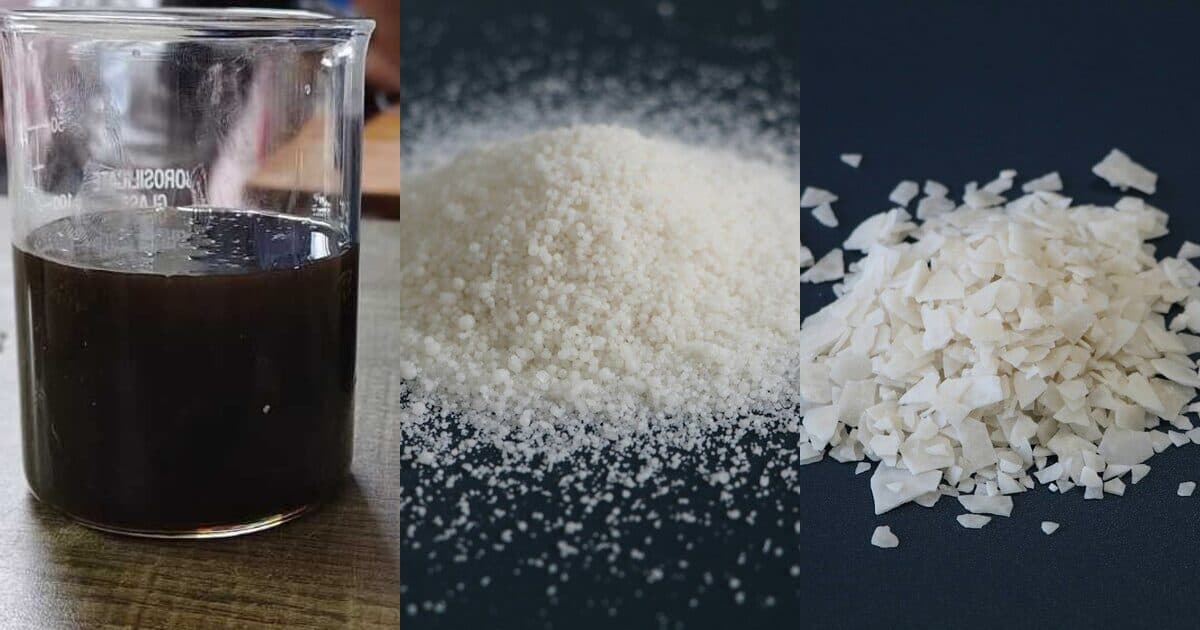
A detergent powder, cake or liquid is mostly made from a handful of bulk chemicals. LABSA provides the cleaning, soda ash or caustic soda neutralises it and softens the water, and fillers and additives make up the rest. Kant Exim supplies the main ones: LABSA 90%, soda ash light, caustic soda flakes, sodium bicarbonate and industrial salt, each with a certificate of analysis (COA).
This guide explains what each raw material does, how much alkali LABSA needs, typical formula ranges, and how to pack, ship and handle these chemicals safely.
The raw materials at a glance
| Raw material | Role in detergents | Typical grade | HS code | Packing |
|---|---|---|---|---|
| LABSA 90% | Main surfactant (cleaning agent) once neutralised | 90% active matter | 3402 31 | Drums, IBCs or tankers |
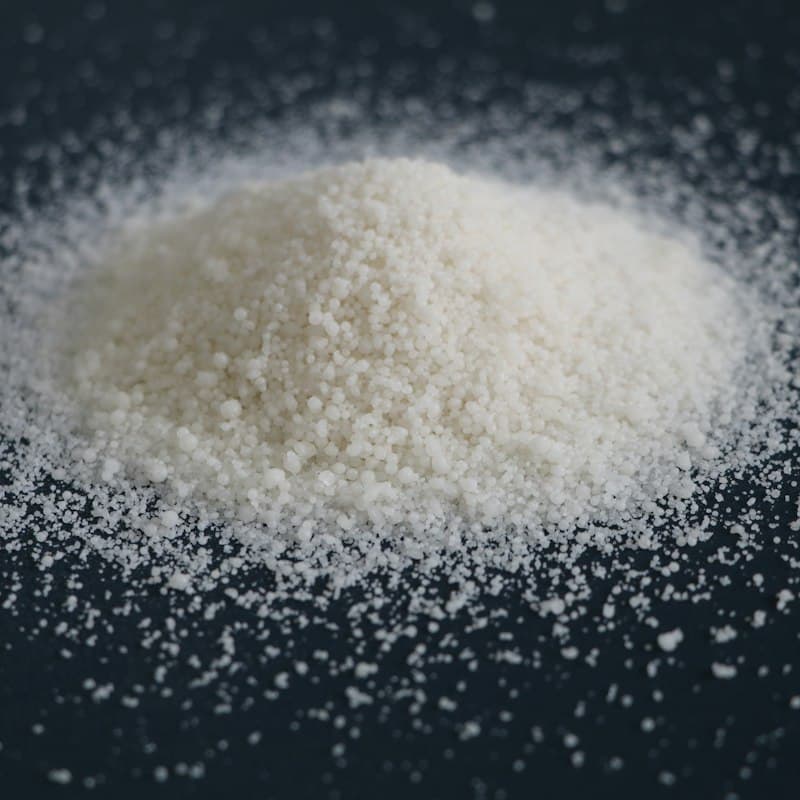
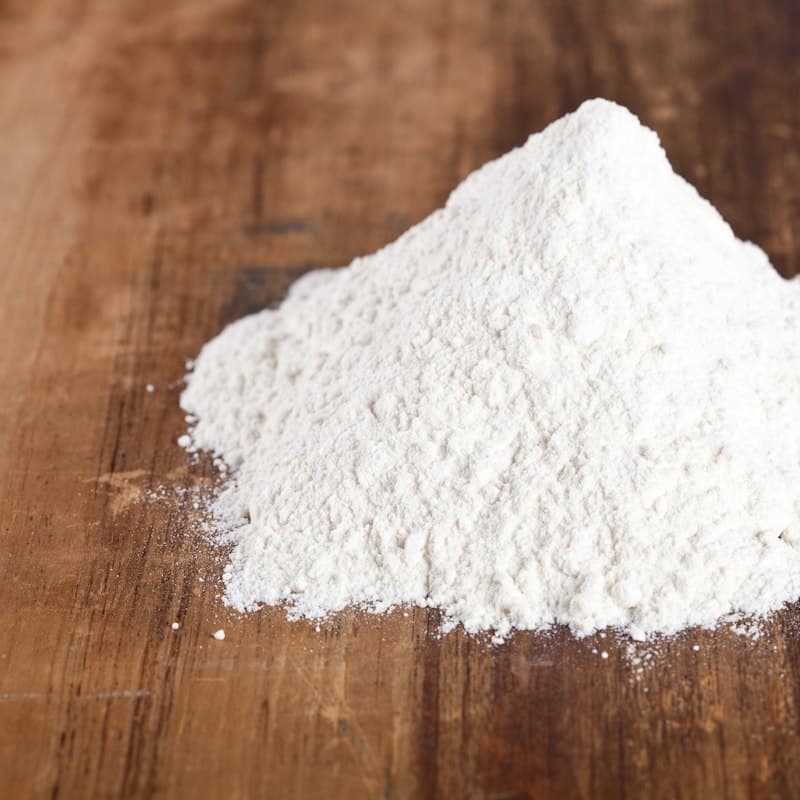
| Soda ash light | Neutraliser, builder and alkali in powders | Na₂CO₃ min. 99.2% | 2836 20 | 50 kg HDPE bags |
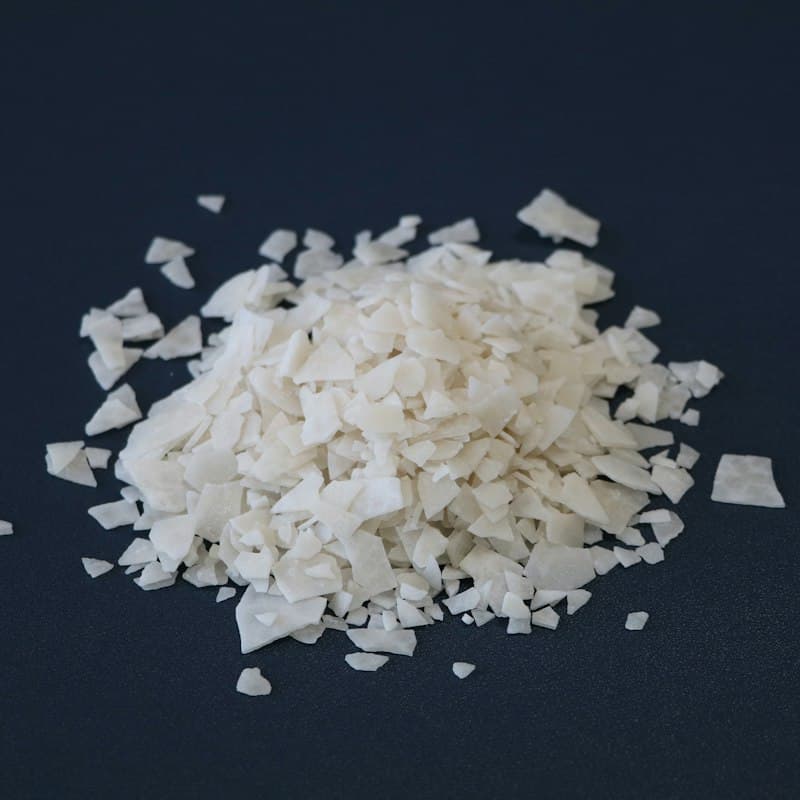
| Caustic soda flakes | Neutraliser for liquids and spray-dried slurry | NaOH about 98% (min. 97%) | 2815 11 | 25 / 50 kg HDPE bags |
| Sodium bicarbonate | Mild alkali in cleaning and dishwash powders | NaHCO₃ min. 99% | 2836 30 | 25 kg bags |
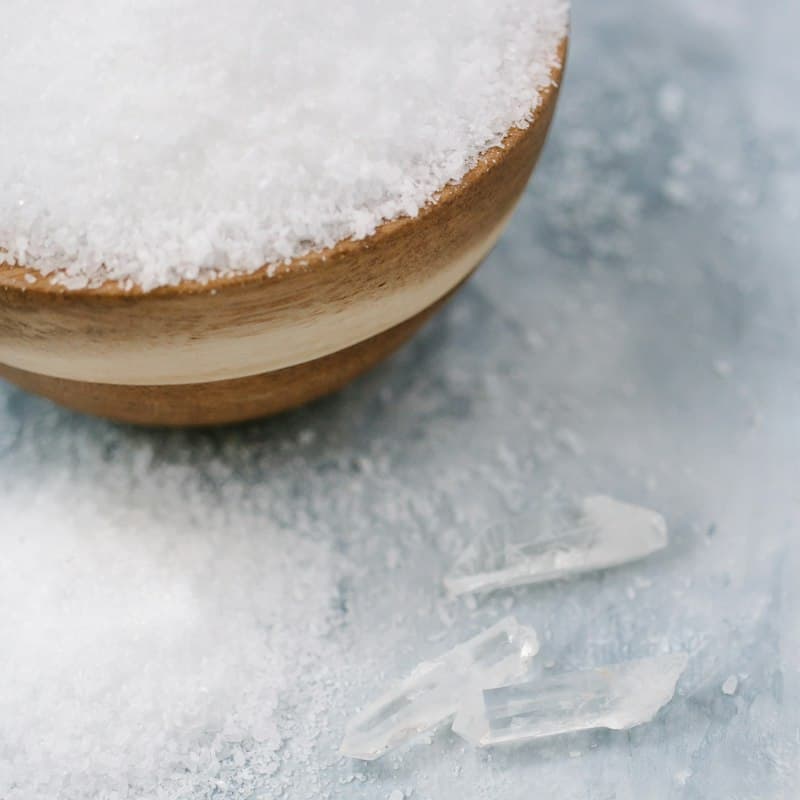
| Industrial salt | Thickener for liquids, low-cost filler | NaCl min. 98% | 2501 00 | 25 / 50 kg bags, jumbo bags or bulk |
LABSA: the cleaning agent
LABSA (linear alkyl benzene sulphonic acid), also called acid slurry, is the active ingredient in most laundry and dishwash products. On its own it is a strong acid. Once neutralised it becomes sodium LAS, the surfactant that lifts oil and dirt from fabric and dishes.
Two figures on the COA matter most for formulation:
- Active matter tells you how much surfactant you are buying. Our recent LABSA 90% lot tested at 89.80%.
- Free acid is extra acidity that also has to be neutralised, so it adds to the alkali you need.
For the full COA results and what each figure means, read LABSA 90%: specifications, COA results and uses.
Soda ash light: neutraliser and builder
Soda ash (sodium carbonate, Na₂CO₃) does three jobs in a detergent powder:
- Neutralises LABSA in dry-mix production
- Softens water by binding calcium and magnesium, so the surfactant works better in hard water
- Raises the pH of the wash, which helps remove oily and acidic soils
Detergent makers use the light grade rather than dense. Light soda ash has a lower bulk density (roughly 0.5–0.6 g/cm³, against about 1.0 for dense) and more porous particles, so it absorbs liquid LABSA evenly in the mixer and gives a free-flowing powder. Dense soda ash is mainly used in glass making.
Caustic soda flakes: neutraliser for liquids
Caustic soda (sodium hydroxide, NaOH) is a stronger alkali than soda ash. It is the usual choice when:
- making liquid detergents and dishwash liquids, where LABSA is neutralised in water
- preparing slurry for spray-dried powder in large plants
- making soap, where it reacts with oils and fats
Flakes are dissolved in water to make a lye solution before use. Our caustic soda flakes are technical grade at about 98% NaOH: a recent lot tested at 98.07%. See caustic soda flakes 98%: specifications, COA results and uses.
Sodium bicarbonate and salt: supporting roles
- Sodium bicarbonate (NaHCO₃) is a milder alkali than soda ash. It is used in cleaning powders, dishwash powders and some laundry formulas where a gentler product is wanted.
- Industrial salt (NaCl) thickens liquid detergents and dishwash liquids made with LAS: a small, controlled addition raises the viscosity. Some low-cost powders and cakes also use it as a filler.
How much alkali does LABSA need?
LABSA is neutralised by one of these reactions:
- With caustic soda: LABSA + NaOH → sodium LAS + water
- With soda ash: 2 LABSA + Na₂CO₃ → 2 sodium LAS + water + carbon dioxide
Taking an average molecular weight for LABSA of about 322, the alkali needed for the sulphonic acid itself is:
| Per 1 kg of LABSA | Pure NaOH | Caustic soda flakes (98%) | Soda ash (Na₂CO₃) |
|---|---|---|---|
| LABSA 90% | about 0.112 kg | about 0.114 kg | about 0.148 kg |
| LABSA 96% | about 0.119 kg | about 0.122 kg | about 0.158 kg |
Add more for the free acid shown on the COA of your lot, then confirm the end point by checking the pH of a sample. In dry-mix powders soda ash is used well above this amount anyway, because the excess acts as a builder.
Typical detergent powder formula ranges
The table below shows typical starting ranges for a dry-mix laundry powder. They are a guide only: your formulator adjusts them for cost, local water hardness and the quality you want.
| Ingredient | Typical range (% by weight) | Purpose |
|---|---|---|
| LABSA 90% | 8 – 15% | Surfactant |
| Soda ash light | 25 – 40% | Neutraliser, builder, alkali |
| Sodium sulphate | 25 – 50% | Filler, helps flow |
| Sodium silicate | 5 – 10% | Corrosion protection, binder |
| STPP or zeolite | 0 – 15% | Extra builder for hard water |
| CMC | 0.5 – 1% | Stops dirt settling back on fabric |
| Optical brightener, perfume, colour | under 1% | Appearance and scent |
Dry-mix or spray-dried?
- Dry-mix (dry neutralisation): soda ash light is loaded into a ribbon or sigma mixer and LABSA is added slowly while mixing. The reaction releases heat and carbon dioxide. Fillers and additives go in next, and the powder is cured, sieved and packed. It needs little equipment, which is why most small and mid-size detergent makers use it.
- Spray-dried: LABSA is neutralised with caustic soda in a slurry, mixed with the other ingredients and dried in a spray tower. It makes light, hollow granules but needs a large plant.
- Detergent cakes and bars are made by neutralising LABSA with soda ash in a mixer, adding fillers, then plodding and pressing the mass into bars.
Packing and shipping
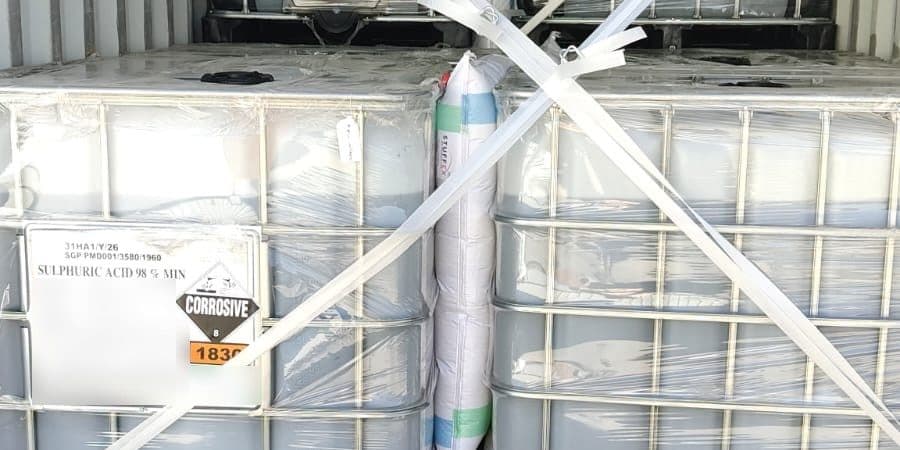
Soda ash light, sodium bicarbonate and caustic soda flakes are packed in HDPE or PP bags, and can often be combined in one container to cover a full production run. LABSA is an acid and caustic soda is an alkali, so dangerous-goods rules usually require them to be kept apart; LABSA normally ships in its own container of drums or IBCs. Tell us everything you need and we will plan the loads.
Caustic soda flakes ship as UN 1823, Class 8 (corrosive). LABSA is also corrosive; the UN entry for each lot is stated in its safety data sheet. Soda ash light, sodium bicarbonate and salt are not classed as dangerous goods for transport.
Safety essentials
- Caustic soda causes severe burns. Dissolving it in water releases a lot of heat: always add flakes slowly to water, never water to flakes, and use a container that can take the heat.
- LABSA causes severe skin burns and eye damage.
- Neutralising LABSA gives off heat and, with soda ash, carbon dioxide. Add the acid gradually in a ventilated mixing area.
- Soda ash dust irritates the eyes and airways. Use dust masks and keep bags closed.
- Wear protective equipment: chemical goggles or a face shield, rubber gloves, an apron and boots when handling LABSA and caustic soda.
The full MSDS / SDS comes with every order. See our guide to what to check in an SDS.
Documents with every order
- Certificate of analysis (COA) for each lot — see how to read a COA
- Material safety data sheet (MSDS / SDS) for each product
- Invoice, packing list and the transport documents required for Class 8 goods
Request a quote
To quote for detergent raw materials, send us:
- Products and quantities, for example LABSA 90% plus soda ash light, and whether it is a one-time or monthly requirement
- What you make: detergent powder, cakes, liquids or dishwash products
- Packing for each product
- Delivery location, or your destination port
Contact us for a quote, or browse our industrial chemicals.
Frequently asked questions
What raw materials are used to make detergent powder?
The main ones are LABSA (the surfactant), soda ash light (neutraliser, builder and alkali) and sodium sulphate (filler), plus smaller amounts of sodium silicate, CMC, optical brightener, perfume and colour. Some formulas add STPP or zeolite for hard water.
How much caustic soda is needed to neutralise LABSA?
About 0.11 kg of pure NaOH per kg of LABSA 90% (about 0.12 kg for LABSA 96%) for the sulphonic acid itself, plus extra for the free acid on the lot's COA. Confirm the end point by checking the pH of a sample.
Why is light soda ash used in detergents instead of dense?
Light soda ash has a lower bulk density and more porous particles, so it absorbs liquid LABSA evenly in the mixer and gives a free-flowing powder. Dense soda ash is mainly used in glass making.
Should I neutralise LABSA with soda ash or caustic soda?
Soda ash is used for dry-mix detergent powders and cakes, where the excess also acts as a builder. Caustic soda is used for liquid detergents, dishwash liquids and spray-dried slurry, where LABSA is neutralised in water.
Can LABSA and caustic soda be shipped in the same container?
Usually not. LABSA is an acid and caustic soda is an alkali, and dangerous-goods rules require them to be kept apart. Soda ash, sodium bicarbonate and caustic soda flakes can often be combined in one container.
Do you supply all detergent raw materials together?
We supply LABSA 90%, soda ash light, caustic soda flakes, sodium bicarbonate and industrial salt, each with a COA and MSDS. Tell us your full requirement and we will quote and plan the shipments together.
- #detergent raw materials
- #detergent powder
- #LABSA
- #acid slurry
- #soda ash light
- #caustic soda flakes
- #sodium bicarbonate
- #dry-mix detergent